
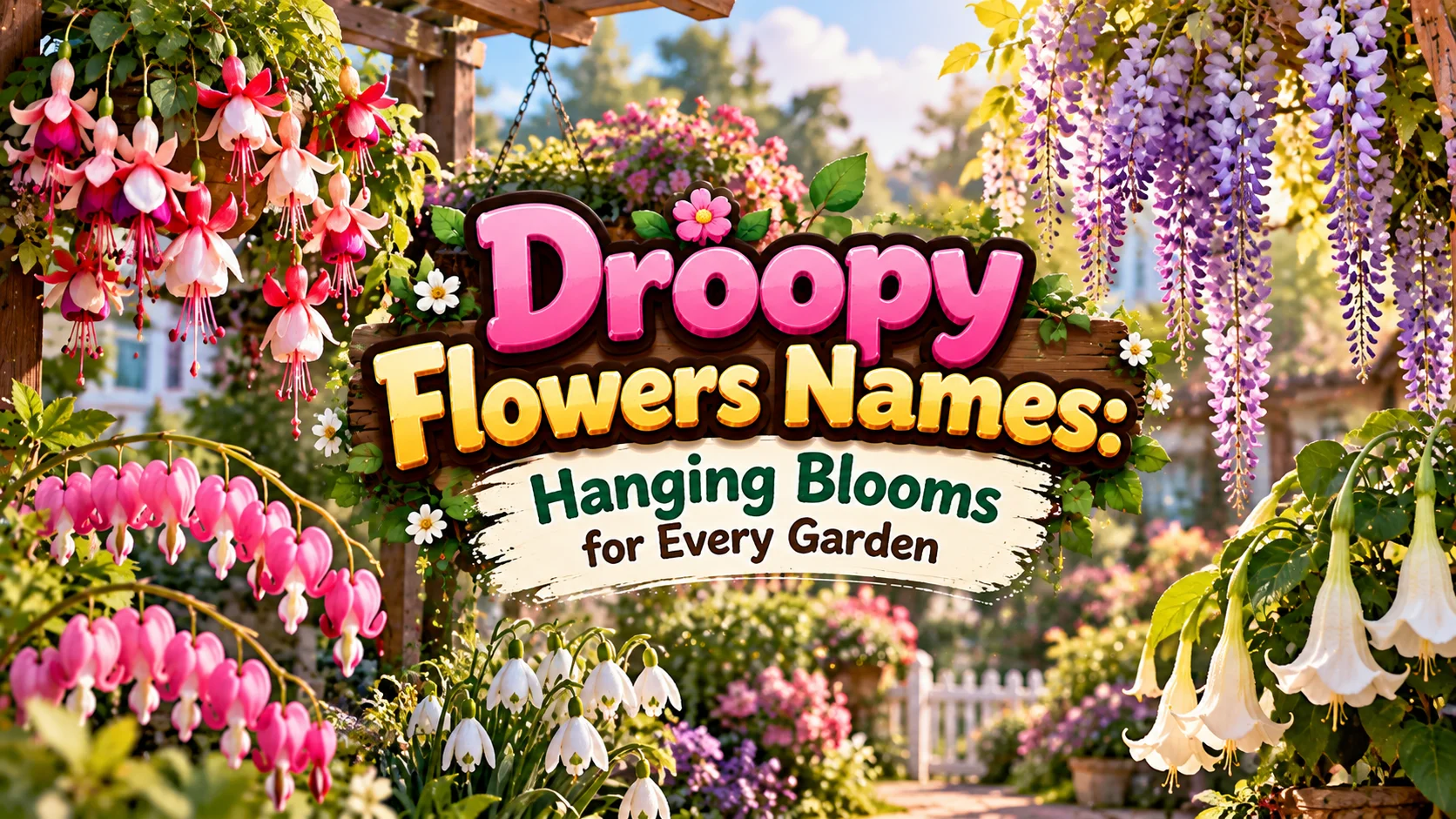
Have you ever noticed flowers that seem to bow their heads, spill gracefully from a planter, or hang beneath their stems like tiny bells? These beautiful blooms have a special charm that makes gardens, hanging baskets, woodland spaces, and floral arrangements feel softer and more natural. Droopy flowers names can refer to flowers with naturally nodding blooms, trailing growth habits, pendulous flowers, or stems that gracefully bend under the weight of the blossoms.
Some drooping flowers look delicate and romantic, while others have a dramatic, tropical, wild, or cottage-garden appearance. Familiar examples include fuchsias, bleeding hearts, snowdrops, lily of the valley, foxgloves, bellflowers, and certain orchids. Their downward-facing flowers are not necessarily a sign of poor health; in many species, the hanging shape is simply part of their natural growth pattern.
Whether you are searching for flowers that hang down, flowers that droop naturally, bell-shaped flowers, nodding flowers, trailing flowers, hanging basket flowers, or weeping flowering plants, this guide gives you plenty of names to explore.
🌷 What Are Droopy Flowers?
Droopy flowers are blooms that naturally face downward, bend toward the ground, or hang from arching and trailing stems. Botanically, these flowers may be described as nodding, pendulous, pendant, hanging, or drooping, depending on their growth habit.
This shape can serve several purposes in nature. Some downward-facing flowers protect their pollen and nectar from rain, while others are shaped to attract particular pollinators. In gardens, the same structure creates a beautiful cascading effect that works especially well in hanging baskets and containers.
Not every drooping flower is identical. Some hang like bells, some bow gently from upright stems, and others trail completely over the edge of a container.
🌺 Popular Droopy Flower Names
If you simply want to know which flowers are famous for their naturally hanging or nodding blooms, start with this collection. These plants represent some of the most recognizable examples of downward-facing flowers.
Their shapes range from delicate woodland blossoms to colorful garden favorites, giving you plenty of inspiration for landscaping or flower identification.
- Fuchsia
- Bleeding Heart
- Lily of the Valley
- Snowdrop
- Foxglove
- Bellflower
- Columbine
- Hellebore
- Hosta
- Campanula
- Harebell
- Solomon’s Seal
- Shooting Star
- Nodding Onion
- Nodding Trillium
- Coral Bells
- Angel’s Trumpet
- Christmas Cactus
- Easter Cactus
- Orchid
- Cyclamen
- Hyacinth
- Daffodil
- Tulip
- Crown Imperial
- Lily
- Martagon Lily
- Turk’s Cap Lily
- Checker Lily
- Snake’s Head Fritillary
- Guinea-Hen Flower
- Crown Imperial
- Snowflake
- Summer Snowflake
- Japanese Snowbell
- Pieris
- Andromeda
- Mountain Laurel
- Rhododendron
- Heather
- Heath
- Abutilon
- Coral Vine
- Dutchman’s Pipe
- Passionflower
- Trumpet Vine
- Honeysuckle
- Wisteria
- Morning Glory
- Sweet Pea
- Black-Eyed Susan Vine
- Million Bells
- Bacopa
- Lobelia
- Nemesia
- Diascia
- Calibrachoa
- Torenia
- Nasturtium
- Trailing Begonia
- Trailing Petunia
- String of Pearls
- String of Hearts
- String of Bananas
- String of Dolphins
- Burro’s Tail
- Christmas Rose
- Lenten Rose
- Shooting Star
- Fairy Slipper
- Lady’s Slipper Orchid
- Monkey Orchid
- Dancing Lady Orchid
- Lady’s Mantle
- Nodding Saxifrage
- Nodding Catchfly
- Drooping Saxifrage
- Nodding Campion
- Weeping Pea
- Weeping Bottlebrush
- Weeping Cherry
- Weeping Crabapple
- Weeping Rose
- Weeping Wisteria
- Weeping Forsythia
🔔 Bell-Shaped Flowers That Hang Down
Bell-shaped flowers are some of the most recognizable droopy blooms. Their petals often form a cup or bell that naturally points toward the ground, creating an elegant silhouette.
These flowers are especially attractive in woodland gardens, cottage landscapes, rock gardens, containers, and hanging displays. Their pendulous shape can also make them look like tiny lanterns scattered throughout the garden.
- Lily of the Valley
- Bluebell
- Harebell
- Canterbury Bell
- Campanula
- Foxglove
- Fuchsia
- Snowdrop
- Snowflake
- Japanese Bellflower
- Peach-Leaved Bellflower
- Serbian Bellflower
- Dalmatian Bellflower
- Carpathian Bellflower
- Nodding Bellflower
- Irish Bellflower
- Abutilon
- Angel’s Trumpet
- Coral Bells
- Mountain Laurel
- Pieris
- Andromeda
- Enkianthus
- Japanese Snowbell
- Silverbell
- Hellebore
- Columbine
- Shooting Star
- Fairy Bells
- Solomon’s Seal
- Twining Snapdragon
- Desert Bells
- Harebell
- Scottish Bluebell
- Virginia Bluebells
- Spanish Bluebell
- English Bluebell
- Wood Hyacinth
- Grape Hyacinth
- Snake’s Head Fritillary
- Crown Imperial
- Guinea-Hen Flower
- Checker Lily
- Chocolate Lily
- Fritillary
- Martagon Lily
- Turk’s Cap Lily
- Tiger Lily
- Daylily
- Coral Honeysuckle
- Japanese Honeysuckle
- Trumpet Honeysuckle
- Cup-and-Saucer Vine
- Black-Eyed Susan Vine
- Cathedral Bells
- Cuphea
- Mexican Heather
- Bush Clock Vine
- Clock Vine
- Cup-and-Saucer Flower
- Bellflower Vine
- Belladonna Lily
- Fairy Slipper
- Lady’s Slipper
- Fairy Lantern
- Lantern Flower
- Wax Bell
- Waxflower
- Bell Heath
- Bell Heather
- Bell Bush
- Bell Lily
- Bell Orchid
- Bell Vine
- Bell Sage
- Bell Mint
- Bell Thyme
- Bellwort
- Merrybells
- Sessile Bellwort
- Nodding Bellwort
- Yellow Bellflower
- Purple Bellflower
- White Bellflower
- Pink Bellflower
- Red Bellflower
🌿 Flowers That Naturally Droop From Their Stems
Some flowers do not form perfect bells but still naturally bend downward from their stems. This nodding habit gives them a relaxed, almost shy appearance.
Many of these plants are excellent choices if you love gardens filled with movement rather than rigid upright flowers. Their stems sway in the breeze, while the blooms hang gracefully below the foliage.
- Bleeding Heart
- Fuchsia
- Columbine
- Foxglove
- Hellebore
- Snowdrop
- Snowflake
- Lily of the Valley
- Solomon’s Seal
- Shooting Star
- Nodding Onion
- Nodding Trillium
- Nodding Campion
- Nodding Catchfly
- Nodding Saxifrage
- Nodding Thistle
- Nodding Violet
- Nodding Begonia
- Nodding Bellflower
- Nodding Orchid
- Nodding Lady’s Tresses
- Nodding Lady’s Slipper
- Nodding Fritillary
- Nodding Lily
- Martagon Lily
- Turk’s Cap Lily
- Snake’s Head Fritillary
- Crown Imperial
- Checker Lily
- Chocolate Lily
- Guinea-Hen Flower
- Shooting Star
- Fairy Slipper
- Lady’s Slipper
- Helleborine
- Green Hellebore
- Christmas Rose
- Lenten Rose
- Christmas Cactus
- Easter Cactus
- Schlumbergera
- Cyclamen
- Orchid
- Lady’s Tresses
- Coral Bells
- Lily Bell
- Japanese Bellflower
- Bluebell
- Harebell
- Wood Hyacinth
- Spanish Bluebell
- English Bluebell
- Virginia Bluebells
- Grape Hyacinth
- Japanese Snowbell
- Silverbell
- Mountain Laurel
- Pieris
- Andromeda
- Enkianthus
- Heather
- Heath
- Rhododendron
- Azalea
- Weeping Rose
- Weeping Pea
- Weeping Wisteria
- Weeping Cherry
- Weeping Crabapple
- Weeping Forsythia
- Weeping Bottlebrush
- Weeping Fig
- Weeping Hydrangea
- Weeping Begonia
- Trailing Fuchsia
- Trailing Petunia
- Trailing Lobelia
- Trailing Bacopa
- Trailing Nasturtium
- Trailing Begonia
- Trailing Verbena
- Trailing Pansy
- Trailing Geranium
💗 Pink Droopy Flowers for a Romantic Garden
Pink hanging and nodding flowers create an especially romantic garden atmosphere. Their soft color combined with downward-facing petals can make borders, containers, and cottage gardens feel graceful and dreamy.
If you are looking for pink flowers that naturally hang or trail, these are some beautiful possibilities.
- Pink Fuchsia
- Bleeding Heart
- Pink Foxglove
- Pink Columbine
- Pink Hellebore
- Pink Cyclamen
- Pink Lily of the Valley
- Pink Bellflower
- Pink Snowdrop
- Pink Fritillary
- Pink Martagon Lily
- Pink Turk’s Cap Lily
- Pink Honeysuckle
- Pink Wisteria
- Pink Angel’s Trumpet
- Pink Abutilon
- Pink Calibrachoa
- Pink Petunia
- Pink Lobelia
- Pink Bacopa
- Pink Begonia
- Pink Diascia
- Pink Nemesia
- Pink Torenia
- Pink Fuchsia Vine
- Pink Trailing Rose
- Pink Weeping Rose
- Pink Weeping Cherry
- Pink Weeping Crabapple
- Pink Weeping Wisteria
- Pink Weeping Hydrangea
- Pink Crown Imperial
- Pink Hyacinth
- Pink Tulip
- Pink Daffodil
- Pink Lily
- Pink Orchid
- Pink Lady’s Slipper
- Pink Fairy Slipper
- Pink Coral Bells
- Pink Shooting Star
- Pink Solomon’s Seal
- Pink Nodding Onion
- Pink Nodding Trillium
- Pink Nodding Campion
- Pink Nodding Catchfly
- Pink Nodding Saxifrage
- Pink Heather
- Pink Heath
- Pink Rhododendron
- Pink Azalea
- Pink Pieris
- Pink Andromeda
- Pink Enkianthus
- Pink Honeysuckle
- Pink Trumpet Vine
- Pink Morning Glory
- Pink Sweet Pea
- Pink Nasturtium
- Pink Million Bells
- Pink String of Hearts
- Pink String of Pearls
- Pink Burro’s Tail
- Pink Christmas Cactus
- Pink Easter Cactus
- Pink Dancing Lady Orchid
- Pink Monkey Orchid
- Pink Cymbidium Orchid
- Pink Dendrobium Orchid
- Pink Phalaenopsis Orchid
- Pink Vanda Orchid
- Pink Cymbalaria
- Pink Cuphea
- Pink Diascia
- Pink Verbena
- Pink Bacopa
- Pink Calibrachoa
- Pink Scaevola
- Pink Nemesia
- Pink Bidens
- Pink Geranium
- Pink Ivy Geranium
- Pink Trailing Pansy
- Pink Trailing Lobelia
💜 Purple and Blue Drooping Flowers
Purple and blue flowers naturally create a cool, dreamy atmosphere, and when their blooms hang downward, the effect can be particularly striking.
These flowers can add depth to cottage gardens, woodland plantings, containers, and mixed borders.
- Purple Fuchsia
- Purple Bellflower
- Purple Foxglove
- Purple Columbine
- Purple Hellebore
- Purple Lily
- Purple Fritillary
- Purple Martagon Lily
- Purple Honeysuckle
- Purple Wisteria
- Purple Angel’s Trumpet
- Purple Abutilon
- Purple Campanula
- Purple Harebell
- Purple Bluebell
- Purple Hyacinth
- Purple Grape Hyacinth
- Purple Cyclamen
- Purple Orchid
- Purple Lady’s Slipper
- Purple Fairy Slipper
- Purple Shooting Star
- Purple Coral Bells
- Purple Heather
- Purple Heath
- Purple Rhododendron
- Purple Azalea
- Purple Pieris
- Purple Enkianthus
- Purple Sweet Pea
- Purple Morning Glory
- Purple Nasturtium
- Purple Lobelia
- Purple Bacopa
- Purple Calibrachoa
- Purple Petunia
- Purple Verbena
- Purple Diascia
- Purple Nemesia
- Purple Torenia
- Purple Scaevola
- Purple Trailing Begonia
- Purple Trailing Rose
- Purple Weeping Rose
- Purple Weeping Wisteria
- Blue Fuchsia
- Blue Bellflower
- Blue Harebell
- Blue Campanula
- Bluebell
- English Bluebell
- Spanish Bluebell
- Scottish Bluebell
- Virginia Bluebells
- Blue Foxglove
- Blue Columbine
- Blue Hellebore
- Blue Delphinium
- Blue Hyacinth
- Blue Grape Hyacinth
- Blue Lobelia
- Blue Bacopa
- Blue Petunia
- Blue Calibrachoa
- Blue Nemesia
- Blue Scaevola
- Blue Torenia
- Blue Morning Glory
- Blue Sweet Pea
- Blue Butterfly Pea
- Blue Plumbago
- Blue Orchid
- Blue Lady’s Slipper
- Blue Fairy Slipper
- Blue Shooting Star
- Blue Coral Bells
- Blue Heather
- Blue Harebell
- Blue Bellflower
- Blue Enkianthus
- Blue Pieris
- Blue Andromeda
- Blue Snowdrop
- Blue Snowflake
- Blue Fritillary
🌼 Yellow and Golden Droopy Flowers
Yellow hanging flowers bring warmth and brightness to a garden. Their downward-facing forms can look like little golden bells, lanterns, or suspended drops of sunlight.
These flowers work beautifully when combined with purple, blue, white, and green foliage.
- Yellow Fuchsia
- Yellow Columbine
- Yellow Bellflower
- Yellow Foxglove
- Yellow Hellebore
- Yellow Lily
- Yellow Fritillary
- Yellow Crown Imperial
- Yellow Turk’s Cap Lily
- Yellow Martagon Lily
- Yellow Snowdrop
- Yellow Snowflake
- Yellow Hyacinth
- Yellow Daffodil
- Yellow Tulip
- Yellow Cyclamen
- Yellow Orchid
- Yellow Lady’s Slipper
- Yellow Fairy Slipper
- Yellow Shooting Star
- Yellow Coral Bells
- Yellow Honeysuckle
- Yellow Trumpet Vine
- Yellow Wisteria
- Yellow Angel’s Trumpet
- Yellow Abutilon
- Yellow Calibrachoa
- Yellow Petunia
- Yellow Lobelia
- Yellow Bacopa
- Yellow Diascia
- Yellow Nemesia
- Yellow Torenia
- Yellow Nasturtium
- Yellow Sweet Pea
- Yellow Morning Glory
- Yellow Trailing Begonia
- Yellow Trailing Rose
- Yellow Weeping Rose
- Yellow Weeping Wisteria
- Yellow Weeping Cherry
- Yellow Weeping Crabapple
- Yellow Weeping Forsythia
- Yellow Weeping Bottlebrush
- Golden Bell
- Golden Fuchsia
- Golden Columbine
- Golden Bellflower
- Golden Lily
- Golden Fritillary
- Golden Crown Imperial
- Golden Honeysuckle
- Golden Trumpet Vine
- Golden Wisteria
- Golden Abutilon
- Golden Calibrachoa
- Golden Petunia
- Golden Nasturtium
- Golden Sweet Pea
- Golden Morning Glory
- Golden Trailing Rose
- Golden Begonia
- Golden Cyclamen
- Golden Orchid
- Golden Lady’s Slipper
- Golden Shooting Star
- Golden Coral Bells
- Golden Heather
- Golden Heath
- Golden Pieris
- Golden Andromeda
- Golden Enkianthus
- Golden Snowdrop
- Golden Snowflake
- Golden Hyacinth
- Golden Daffodil
- Golden Tulip
- Golden Lily
- Golden Bell Vine
- Golden Bellflower
- Golden Lantern Flower
- Golden Fairy Bells
- Golden Droplet
- Golden Cascades
- Golden Pendant
- Golden Weeping Bloom
🪴 Droopy Flowers for Hanging Baskets
Hanging baskets are one of the easiest ways to display flowers that naturally trail or cascade. Instead of fighting gravity, these plants use their growth habit to spill over the edge of a container.
When choosing plants for hanging baskets, consider light, watering needs, temperature, and the amount of room available for trailing stems.
- Fuchsia
- Trailing Petunia
- Calibrachoa
- Lobelia
- Bacopa
- Trailing Begonia
- Trailing Geranium
- Ivy Geranium
- Verbena
- Diascia
- Nemesia
- Scaevola
- Torenia
- Nasturtium
- Sweet Alyssum
- Million Bells
- Dichondra
- String of Pearls
- String of Hearts
- String of Bananas
- String of Dolphins
- Burro’s Tail
- Creeping Jenny
- Creeping Thyme
- Bacopa
- Bidens
- Bidens alba
- Lotus Vine
- Black-Eyed Susan Vine
- Sweet Potato Vine
- Trailing Lantana
- Trailing Rosemary
- Trailing Thyme
- Trailing Snapdragon
- Trailing Pansy
- Trailing Viola
- Trailing Rose
- Trailing Verbena
- Trailing Snapdragon
- Trailing Lobelia
- Trailing Fuchsia
- Trailing Calibrachoa
- Trailing Petunia
- Trailing Bacopa
- Trailing Begonia
- Trailing Nasturtium
- Trailing Scaevola
- Trailing Diascia
- Trailing Nemesia
- Trailing Torenia
- Trailing Coleus
- Trailing Heliotrope
- Trailing Osteospermum
- Trailing Gazania
- Trailing Portulaca
- Trailing Impatiens
- Trailing Vinca
- Trailing Purslane
- Trailing Snapdragon
- Trailing Candytuft
- Trailing Sweet Pea
- Trailing Morning Glory
- Trailing Mandevilla
- Trailing Dipladenia
- Trailing Jasmine
- Trailing Honeysuckle
- Trailing Clematis
- Trailing Passionflower
- Trailing Black-Eyed Susan
- Trailing Thunbergia
- Trailing Cuphea
- Trailing Oxalis
- Trailing Tradescantia
- Trailing Peperomia
- Trailing Hoya
- Trailing Dischidia
- Trailing Aeschynanthus
- Trailing Nematanthus
- Trailing Rhipsalis
- Trailing Schlumbergera
- Trailing Christmas Cactus
- Trailing Easter Cactus
- Trailing Orchid
- Trailing Ivy
🌳 Weeping Flowering Plants and Trees
Some flowering plants and trees develop naturally arching or weeping branches. Instead of individual flowers simply hanging downward, the entire plant can create a cascading silhouette.
These plants are particularly useful when you want a dramatic focal point in a garden or landscape.
- Weeping Cherry
- Weeping Higan Cherry
- Weeping Crabapple
- Weeping Peach
- Weeping Mulberry
- Weeping Willow
- Weeping Wisteria
- Weeping Rose
- Weeping Forsythia
- Weeping Bottlebrush
- Weeping Japanese Maple
- Weeping Redbud
- Weeping Dogwood
- Weeping Flowering Almond
- Weeping Pear
- Weeping Apple
- Weeping Apricot
- Weeping Hawthorn
- Weeping Laburnum
- Weeping Golden Chain
- Weeping Sophora
- Weeping Silver Bell
- Weeping Snowdrop
- Weeping Hellebore
- Weeping Begonia
- Weeping Hydrangea
- Weeping Fuchsia
- Weeping Abutilon
- Weeping Brugmansia
- Weeping Angel’s Trumpet
- Weeping Honeysuckle
- Weeping Clematis
- Weeping Passionflower
- Weeping Jasmine
- Weeping Mandevilla
- Weeping Dipladenia
- Weeping Bougainvillea
- Weeping Lantana
- Weeping Verbena
- Weeping Petunia
- Weeping Calibrachoa
- Weeping Lobelia
- Weeping Bacopa
- Weeping Begonia
- Weeping Geranium
- Weeping Impatiens
- Weeping Fuchsia
- Weeping Rose
- Weeping Wisteria
- Weeping Cherry
- Weeping Crabapple
- Weeping Peach
- Weeping Pear
- Weeping Apple
- Weeping Apricot
- Weeping Almond
- Weeping Dogwood
- Weeping Redbud
- Weeping Hawthorn
- Weeping Magnolia
- Weeping Camellia
- Weeping Rhododendron
- Weeping Azalea
- Weeping Pieris
- Weeping Andromeda
- Weeping Enkianthus
- Weeping Heather
- Weeping Heath
- Weeping Laurel
- Weeping Rosebay
- Weeping Honeysuckle
- Weeping Trumpet Vine
- Weeping Wisteria
- Weeping Sweet Pea
- Weeping Morning Glory
- Weeping Passionflower
- Weeping Clematis
- Weeping Jasmine
- Weeping Star Jasmine
- Weeping Gardenia
- Weeping Oleander
- Weeping Plumeria
- Weeping Hibiscus
- Weeping Brugmansia
- Weeping Angel Trumpet
🌲 Woodland Flowers With Nodding Blooms
Woodland gardens are filled with plants that naturally bend toward the ground. Their nodding flowers often look especially beautiful beneath trees, among ferns, and along shaded paths.
Many woodland flowers have delicate structures that appear almost shy, making them excellent choices for a naturalistic landscape.
- Bleeding Heart
- Dutchman’s Breeches
- Squirrel Corn
- Columbine
- Lily of the Valley
- Solomon’s Seal
- False Solomon’s Seal
- Mayapple
- Trillium
- Nodding Trillium
- Red Trillium
- White Trillium
- Yellow Trillium
- Snowdrop
- Snowflake
- Hellebore
- Christmas Rose
- Lenten Rose
- Shooting Star
- Fairy Slipper
- Lady’s Slipper
- Jack-in-the-Pulpit
- Bellwort
- Merrybells
- Sessile Bellwort
- Nodding Bellwort
- Bluebell
- Virginia Bluebells
- Wood Hyacinth
- English Bluebell
- Spanish Bluebell
- Harebell
- Campanula
- Bunchberry
- Twinleaf
- Toothwort
- Rue Anemone
- Wood Anemone
- Bloodroot
- Hepatica
- Foamflower
- Coral Bells
- Wild Geranium
- Wild Columbine
- Wild Bleeding Heart
- Wild Lily
- Wild Orchid
- Lady’s Tresses
- Rattlesnake Plantain
- Wintergreen
- Starflower
- Nodding Starflower
- Clintonia
- False Lily of the Valley
- Solomon’s Seal
- May Lily
- Fairy Bells
- Indian Cucumber Root
- Goldthread
- Dutchman’s Pipe
- Twinflower
- Fringed Polygala
- Gaywings
- Wild Ginger
- Trout Lily
- Dogtooth Violet
- Yellow Adder’s Tongue
- Dogtooth Lily
- Checker Lily
- Chocolate Lily
- Fritillary
- Crown Imperial
- Nodding Onion
- Wild Onion
- Wild Garlic
- Nodding Campion
- Nodding Catchfly
- Nodding Saxifrage
- Nodding Violet
- Nodding Violet
- Nodding Orchid
- Nodding Lady’s Tresses
- Nodding Lady’s Slipper
- Nodding Lily
- Nodding Bellflower
🌱 Why Do Some Flowers Droop?
A flower that points downward is not necessarily unhealthy. In many plants, drooping or nodding is an intentional part of the flower’s structure and helps the species survive.
Downward-facing flowers can protect reproductive parts from rain. In some species, the shape also works well for particular pollinators. A hanging flower may provide a sheltered space where insects can feed on nectar and collect pollen.
Some plants also have heavy flowers that naturally pull stems downward. Others develop trailing growth because their stems are designed to spread across soil, rocks, containers, or neighboring plants.
However, there is an important difference between naturally drooping flowers and flowers that suddenly wilt. If a normally upright plant suddenly develops limp stems, yellowing leaves, or collapsed blooms, the cause could be underwatering, overwatering, heat stress, disease, pests, or root problems.
💧 Are Drooping Flowers Always a Sign of an Unhealthy Plant?
No. A naturally pendulous flower is completely different from a flower that has wilted because of environmental stress.
Plants such as fuchsia, bleeding heart, foxglove, and lily of the valley can have beautifully downward-facing flowers while remaining perfectly healthy. Their shape is part of their normal growth pattern.
If a plant that normally stands upright suddenly becomes limp, examine the soil moisture, sunlight, temperature, drainage, and overall plant health. Sudden drooping can sometimes indicate that the plant needs attention.
🌞 Where Should You Grow Droopy Flowers?
The ideal location depends on the species. Some hanging flowers love bright filtered light, while others prefer full sun or partial shade.
Fuchsias, for example, often appreciate protection from intense afternoon heat in warm climates. Woodland plants such as bleeding heart and lily of the valley generally prefer cooler, partially shaded conditions. Trailing annuals such as petunias and calibrachoas can perform beautifully in sunny hanging baskets when their watering needs are met.
Always check the requirements of the individual plant before choosing its final location. Matching the flower to the environment is much more important than simply choosing a beautiful bloom.
🌼 How to Use Droopy Flowers in a Garden
Drooping flowers can add vertical movement and softness to a garden. Instead of having every flower face upward, hanging blooms create layers by occupying space below leaves and branches.
Try combining upright flowers with nodding varieties. Tall foxgloves, for example, can create vertical structure while lower-growing trailing plants spill toward the ground.
Hanging baskets are another natural choice. Fuchsia, bacopa, lobelia, calibrachoa, and trailing petunias can create a waterfall of color from a container.
For a woodland look, combine nodding flowers with ferns, moss, hostas, and shade-loving ground covers. The result can feel natural and slightly magical.
🌸 How to Choose the Right Droopy Flower
Start by considering your growing conditions. Light exposure, soil type, drainage, humidity, temperature, and available space all influence which plants will thrive.
Next, decide whether you want a nodding flower, hanging basket plant, trailing vine, weeping shrub, or flowering tree. These categories can look very different in a landscape.
Color is another important consideration. White and pale pink flowers create a soft romantic effect, while purple and blue blooms create a cooler atmosphere. Yellow and orange flowers can make a hanging display feel warmer and more energetic.
Finally, think about maintenance. Some trailing plants need frequent trimming, while established flowering shrubs and trees may require much less seasonal shaping.
❓ FAQs About Droopy Flowers
What are flowers that hang downward called?
Flowers that naturally hang downward may be described as pendulous, nodding, pendant, or drooping flowers. The exact term depends on the plant’s structure and botanical description.
What is the most famous drooping flower?
Fuchsia is one of the best-known garden flowers with naturally hanging blooms. Bleeding heart, lily of the valley, foxglove, snowdrop, and bellflowers are also famous for their downward-facing flowers.
What flowers naturally droop?
Many flowers naturally droop or nod, including fuchsia, bleeding heart, foxglove, snowdrop, lily of the valley, hellebore, columbine, Solomon’s seal, shooting star, bellflowers, and fritillaries.
What is a flower that looks like a hanging bell?
Lily of the valley, bluebell, harebell, bellflower, fuchsia, foxglove, snowdrop, and Japanese snowbell can all create a bell-like appearance.
Why do flowers hang down?
Some flowers hang downward because of their natural growth structure. The shape can help protect pollen and nectar from rain or make the flower easier for specific pollinators to access.
What are good droopy flowers for hanging baskets?
Fuchsia, trailing petunia, calibrachoa, lobelia, bacopa, trailing begonia, verbena, diascia, scaevola, and trailing geraniums are popular choices for hanging baskets.
What are pink flowers that hang down?
Bleeding heart and pink fuchsia are especially recognizable examples. Pink foxglove, pink cyclamen, pink bellflowers, pink honeysuckle, and certain orchids can also have hanging or nodding blooms.
What are purple drooping flowers?
Purple fuchsia, purple bellflowers, purple foxglove, purple cyclamen, purple orchids, purple honeysuckle, purple sweet peas, and purple lobelia are examples.
Are drooping flowers unhealthy?
Not necessarily. Some flowers naturally face downward as part of their normal growth. However, sudden wilting in a plant that normally grows upright can indicate watering, heat, root, pest, or disease problems.
What are good woodland flowers with drooping blooms?
Bleeding heart, lily of the valley, Solomon’s seal, snowdrop, hellebore, trillium, shooting star, jack-in-the-pulpit, bellwort, and woodland bluebells are excellent examples.
What trees have drooping flowers?
Some weeping flowering trees and shrubs include weeping cherry, weeping crabapple, weeping peach, weeping almond, weeping redbud, weeping dogwood, and weeping hawthorn.
What is the difference between trailing and drooping flowers?
Trailing plants usually have stems that spread or cascade outward and downward, while a drooping flower generally refers to the position of the individual bloom or flower-bearing stem. Some plants can be both trailing and flowering.
Can droopy flowers grow indoors?
Some can. Certain orchids, fuchsias, hanging begonias, Christmas cactus, Easter cactus, and trailing houseplants can display downward-facing flowers indoors when provided with appropriate light, temperature, humidity, and watering.
🌺 Final Thoughts on Droopy Flowers Names
Droopy flowers have a beauty that feels completely different from upright blooms. Instead of reaching directly toward the sky, their petals bow, trail, nod, or cascade, creating movement and softness throughout the garden.
From the dramatic bleeding heart and colorful fuchsia to delicate snowdrops, elegant lily of the valley, graceful foxgloves, and charming bellflowers, there are countless flowers with naturally downward-facing blooms.
If you are planning a hanging basket, look toward trailing favorites such as fuchsia, bacopa, lobelia, calibrachoa, and petunias. For a woodland garden, consider nodding flowers such as trillium, Solomon’s seal, hellebore, shooting star, and lily of the valley. If you want a dramatic landscape feature, weeping flowering trees and shrubs can create an entirely different effect.
The important thing is to distinguish a naturally drooping flower from a plant that is suddenly wilting. Once you understand that difference, the graceful shape of these blooms becomes one of their most fascinating features.
Whether you are identifying a flower, designing a garden, choosing plants for hanging containers, or simply looking for beautiful flowers that hang down, this collection gives you a broad starting point for exploring the world of nodding and pendulous blooms

Michael Harris is a content writer at NamelyHub, where he shares creative and unique name ideas for every purpose. With a strong interest in branding and modern naming trends, he creates helpful collections of names for pets, teams, businesses, and more.
His goal is to make finding the perfect name simple, inspiring, and accessible for everyone.