
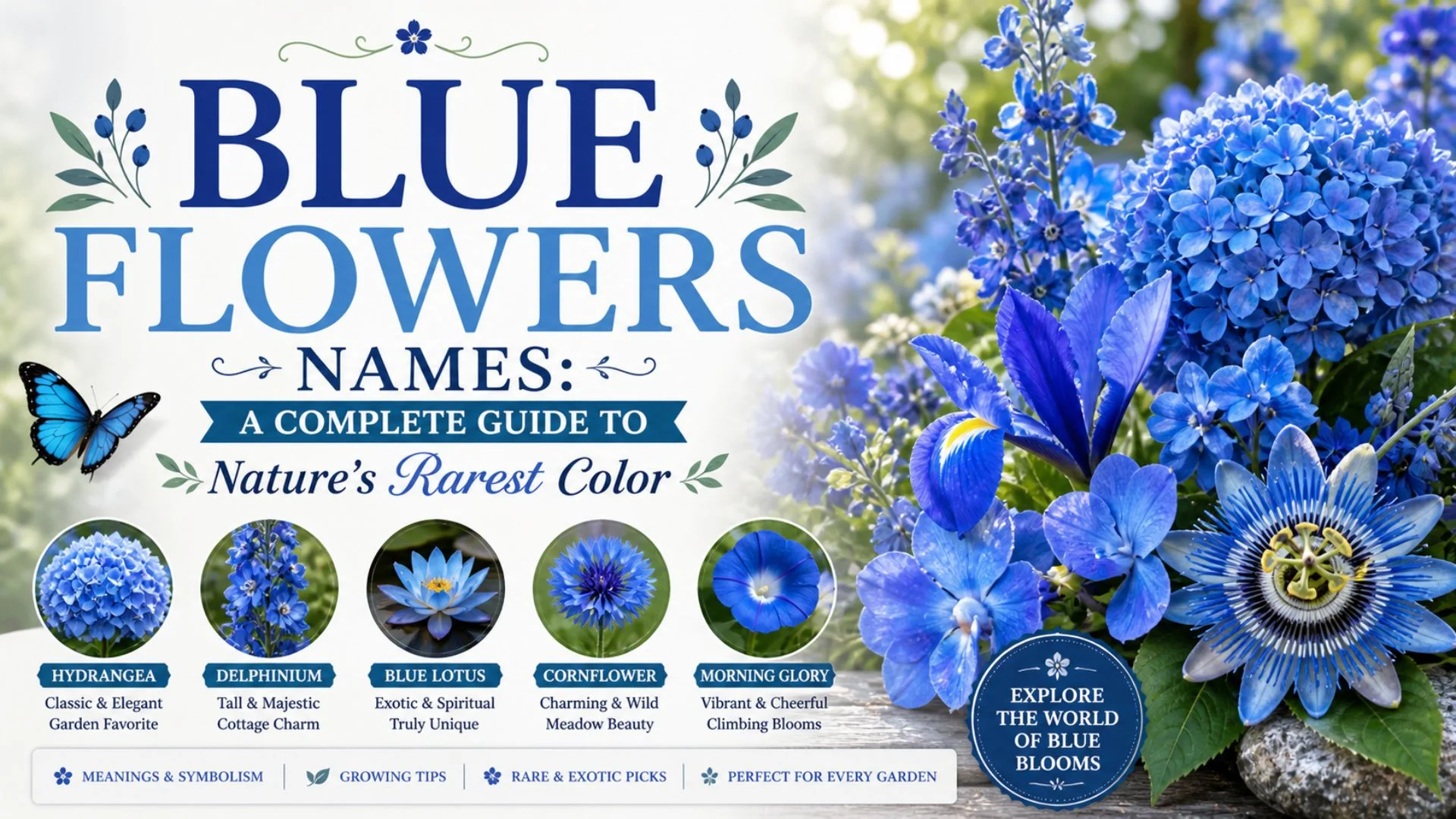
Blue flowers names hold a special place in the gardening world because true blue blooms are surprisingly rare in nature. While red, yellow, and purple flowers grow abundantly, finding a genuine blue petal feels like discovering hidden treasure. Gardeners and flower enthusiasts alike treasure these cool-toned beauties for their calming presence and striking visual appeal. Whether you’re planning a new garden bed, looking for wedding inspiration, or simply love learning about flora, this guide will introduce you to dozens of stunning options.
The science behind blue flowers is fascinating too. Only about ten percent of flowering plants produce true blue pigments. Most so-called blue flowers actually lean toward purple or violet. But the ones that achieve that perfect sky-blue shade become instant showstoppers. From deep indigo delphiniums to soft blue forget-me-nots, each variety brings something unique. This guide covers blue flowers names organized by type, growing season, and style. You’ll discover annuals, perennials, wildflowers, climbing vines and rare. Let’s dive into this beautiful blue world together.
Most Stunning Blue Flowers Names for Your Garden
Blue flowers create a sense of peace and depth in any landscape. Top choices include delphinium, hydrangea, morning glory, cornflower, and lobelia. These reliable bloomers deliver that true blue color gardeners crave.
Annual Blue Flowers Names That Bloom All Season
Annual flowers complete their life cycle in one growing season. These blue beauties bloom continuously from spring until frost. They’re perfect for filling empty garden spots with vibrant color.
- Cornflower
- Bachelor Button
- Blue Daisy
- Love in a Mist
- Nigella
- Annual Lobelia
- Blue Pimpernel
- Forget Me Not
- Blue Toadflax
- Baby Blue Eyes
- Nemophila
- Blue Salvia
- Victoria Blue Salvia
- Blue Daze
- Evolvulus
- Blue Throatwort
- Trachelium
- Blue Cupidone
- Catananche
- Blue Honeywort
- Cerinthe
- Blue Lace Flower
- Trachymene
- Blue Mink
- Ageratum
- Floss Flower
- Blue Queen Salvia
- Blue Veronica
- Annual Phlox
- Blue Swanflower
- Aristolochia
- Blue Cardinal Flower
- Lobelia Erinus
- Blue Monkey Flower
- Mimulus
- Blue Torenia
- Wishbone Flower
- Blue Nolana
- Chilean Bellflower
- Blue Linum
- Flax
- Blue Leptosiphon
- Blue Gilia
- Blue Collinsia
- Blue Penstemon
Perennial Blue Flowers Names That Return Year After Year
Perennials come back stronger each season. These blue flowering plants establish deep root systems. They reward patient gardeners with reliable blooms for many years.
- Delphinium
- Blue Hydrangea
- Blue Iris
- Siberian Iris
- Blue Flax
- Linum Perenne
- Blue Star Flower
- Amsonia
- Blue Bellflower
- Campanula
- Blue Lobelia
- Cardinal Flower
- Blue Speedwell
- Veronica
- Blue Sage
- Salvia Azurea
- Blue Mistflower
- Conoclinium
- Leadwort
- Ceratostigma
- Blue Plumbago
- Blue Columbine
- Aquilegia
- Blue Lupine
- Blue False Indigo
- Baptisia
- Blue Wild Indigo
- Sea Holly
- Eryngium
- Blue Globe Thistle
- Echinops
- Blue Veronica
- Spike Speedwell
- Blue Woodruff
- Asperula
- Blue Cranesbill
- Geranium
- Blue Himalayan Poppy
- Meconopsis
- Blue Pasque Flower
- Pulsatilla
- Blue Primrose
- Primula
- Blue Violet
- Viola Sororia
Climbing Blue Flowers Names for Trellises and Arbors
Vining plants add vertical interest to any garden. These climbing blue flowers cover fences and arbors beautifully. They create stunning living walls of cool blue color.
- Morning Glory
- Ipomoea Tricolor
- Blue Moon Wisteria
- Wisteria Sinensis
- Blue Sky Vine
- Thunbergia Grandiflora
- Blue Passion Flower
- Passiflora Caerulea
- Blue Clematis
- Clematis Integrifolia
- Blue Trumpet Vine
- Clytostoma
- Blue Jade Vine
- Strongylodon Macrobotrys
- Blue Climbing Rose
- Veilchenblau
- Blue Potato Vine
- Solanum Crispum
- Blue Cross Vine
- Bignonia Capreolata
- Blue Morning Glory
- Heavenly Blue
- Blue Clitoria
- Butterfly Pea
- Blue Convolvulus
- Convolvulus Sabatius
- Blue Moon Vine
- Rhodochiton
- Blue Bell Vine
- Codonanthe
- Blue Coral Vine
- Kennedia
- Blue Cup and Saucer
- Cobaea Scandens
- Blue Chinese Wisteria
- Blue Japanese Wisteria
- Blue Honeysuckle
- Lonicera Coerulea
- Blue Jasmine
- Jasminum Blue
- Blue Mandevilla
- Dipladenia
- Blue Petrea
- Queen’s Wreath
- Blue Bougainvillea
- Blue Akebia
- Chocolate Vine
Wild Blue Flowers Names Found in Nature
Wildflowers grow without human help in meadows and forests. These native blue blooms support local pollinators beautifully. They bring a natural, effortless charm to any landscape.
- Chicory
- Cichorium Intybus
- Bluebell
- Hyacinthoides Non Scripta
- Blue Violet
- Viola Pedata
- Blue Eyed Grass
- Sisyrinchium
- Forget Me Not
- Myosotis
- Blue Phlox
- Phlox Divaricata
- Blue Monkshood
- Aconitum
- Blue Larkspur
- Delphinium Carolinianum
- Blue Aster
- Symphyotrichum
- Blue Gentian
- Gentiana
- Blue Lobelia
- Lobelia Siphilitica
- Blue Verbena
- Verbena Hastata
- Blue Skullcap
- Scutellaria
- Blue Sage
- Salvia Reflexa
- Blue Toadflax
- Nuttallanthus Canadensis
- Blue Lupine
- Lupinus Perennis
- Blue Iris
- Iris Virginica
- Blue Flag Iris
- Blue Marsh Violet
- Viola Cucullata
- Blue Wood Aster
- Symphyotrichum Cordifolium
- Blue Heath Aster
- Blue Prairie Clover
- Dalea
- Blue Wildrye
- Elymus
- Blue Camas
- Camassia Quamash
- Blue Bead Lily
- Clintonia
- Blue Cohosh
- Caulophyllum
- Blue Hosta
- Hosta Ventricosa
- Blue Monkey Flower
- Mimulus Lewisii
- Blue Penstemon
- Penstemon Cyananthus
Shade Loving Blue Flowers Names for Dark Garden Spots
Not all gardens get full sun. These blue flowers thrive in partial to full shade. They brighten up those dark corners under trees and along north-facing walls.
- Blue Hydrangea
- Hydrangea Macrophylla
- Blue Lungwort
- Pulmonaria
- Blue Columbine
- Aquilegia Canadensis
- Blue Woodland Phlox
- Phlox Divaricata
- Blue Bellflower
- Campanula Persicifolia
- Blue Monkshood
- Aconitum Napellus
- Blue Hosta
- Hosta Sieboldiana
- Blue Brunnera
- Brunnera Macrophylla
- Blue Corydalis
- Corydalis Flexuosa
- Blue Violet
- Viola Adunca
- Blue Primrose
- Primula Denticulata
- Blue Jacob’s Ladder
- Polemonium Caeruleum
- Blue Bugleweed
- Ajuga Reptans
- Blue Creeping Phlox
- Phlox Stolonifera
- Blue Foamflower
- Tiarella
- Blue Bleeding Heart
- Dicentra Eximia
- Blue Meadow Rue
- Thalictrum
- Blue Anemone
- Anemone Blanda
- Blue Hepatica
- Hepatica Nobilis
- Blue Trillium
- Trillium Erectum
- Blue Bloodroot
- Sanguinaria
- Blue Shooting Star
- Dodecatheon
- Blue Virginia Bluebells
- Mertensia Virginica
- Blue Creeping Jenny
- Lysimachia
- Blue Sweet Woodruff
- Galium Odoratum
- Blue Solomon’s Seal
- Polygonatum
- Blue False Solomon’s Seal
- Maianthemum
- Blue Twinflower
- Linnaea
Drought Tolerant Blue Flowers Names for Dry Gardens
Water conservation matters in many regions. These blue flowers handle dry conditions with ease. They’re perfect for xeriscaping and low maintenance landscapes.
- Blue Sage
- Salvia Farinacea
- Blue Lavender
- Lavandula Angustifolia
- Blue Sea Holly
- Eryngium Planum
- Blue Russian Sage
- Perovskia Atriplicifolia
- Blue Catmint
- Nepeta
- Blue Artemisia
- Artemisia Powis Castle
- Blue Globe Thistle
- Echinops Ritro
- Blue Butterfly Bush
- Buddleja Davidii
- Blue Leadwort
- Ceratostigma Plumbaginoides
- Blue Lithodora
- Lithodora Diffusa
- Blue Rosemary
- Rosmarinus Officinalis
- Blue Germander
- Teucrium
- Blue Rock Rose
- Cistus
- Blue Santolina
- Santolina Chamaecyparissus
- Blue Yarrow
- Achillea Millefolium
- Blue Milkweed
- Asclepias
- Blue Penstemon
- Penstemon Strictus
- Blue Beardtongue
- Blue Calamint
- Calamintha
- Blue Oregano
- Origanum Laevigatum
- Blue Thyme
- Thymus Serpyllum
- Blue Hyssop
- Agastache Foeniculum
- Blue Anise Hyssop
- Blue Hummingbird Mint
- Blue Verbena
- Verbena Bonariensis
- Blue Lantana
- Lantana Camara
- Blue Portulaca
- Portulaca Grandiflora
- Blue Ice Plant
- Delosperma
- Blue Moss Phlox
- Phlox Subulata
- Blue Candytuft
- Iberis Sempervirens
- Blue Rockcress
- Aubrieta
Rare and Exotic Blue Flowers Names for Collectors
Serious plant collectors chase the rarest blues. These unusual blue flowers are hard to find but worth the effort. They’ll make your garden truly one of a kind.
- Blue Himalayan Poppy
- Meconopsis Betonicifolia
- Blue Jade Vine
- Strongylodon Macrobotrys
- Blue Puya
- Puya Alpestris
- Blue Quaker Lady
- Iris Tuberosa
- Blue Parrot Flower
- Impatiens Niamniamensis
- Blue Glory Lily
- Gloriosa Superba
- Blue Lotus
- Nymphaea Caerulea
- Blue Sapphire Flower
- Browallia
- Blue Queen’s Wreath
- Petrea Volubilis
- Blue Butterfly Pea
- Clitoria Ternatea
- Blue Thai Basil
- Ocimum Basilicum
- Blue Hawaiian Lily
- Blue Ginger
- Dichorisandra
- Blue Bat Flower
- Tacca Integrifolia
- Blue Angel’s Trumpet
- Brugmansia
- Blue Devil’s Trumpet
- Datura
- Blue Cardinal Flower
- Lobelia Cardinalis
- Blue Cobra Lily
- Darlingtonia
- Blue Pitcher Plant
- Sarracenia Leucophylla
- Blue Sundew
- Drosera
- Blue Venus Flytrap
- Dionaea Muscipula
- Blue Orchid
- Vanda Coerulea
- Blue Cymbidium
- Blue Dendrobium
- Blue Phalaenopsis
- Blue Lady Slipper
- Cypripedium
- Blue Pleione
- Blue Masdevallia
- Blue Dracula Orchid
- Blue Eria
- Blue Coelogyne
- Blue Sobralia
Blue Flowers Names for Wedding Bouquets
Blue blooms add something blue to wedding arrangements. These flowers hold up well in bouquets and centerpieces. They create stunning contrast with white and green foliage.
- Blue Hydrangea
- Blue Delphinium
- Blue Cornflower
- Blue Thistle
- Eryngium
- Blue Scabiosa
- Pincushion Flower
- Blue Sweet Pea
- Lathyrus Odoratus
- Blue Lisianthus
- Eustoma Grandiflorum
- Blue Statice
- Limonium
- Blue Aster
- Blue Veronica
- Speedwell
- Blue Phlox
- Blue Campanula
- Bluebell Flower
- Blue Nigella
- Love in a Mist
- Blue Anemone
- Blue Ranunculus
- Blue Iris
- Blue Tulip
- Blue Hyacinth
- Blue Muscari
- Grape Hyacinth
- Blue Freesia
- Blue Calla Lily
- Zantedeschia
- Blue Orchid
- Cymbidium
- Blue Carnation
- Dianthus
- Blue Chrysanthemum
- Blue Rose
- Blue Peony
- Blue Dahlia
- Blue Zinnia
- Blue Gerbera
- Blue Daisy
- Blue Protea
- Blue King Protea
- Blue Wax Flower
- Chamelaucium
- Blue Rice Flower
- Ozothamnus
- Blue Eucalyptus
Blue Flowers Names for Butterfly and Bee Gardens
Pollinators love blue flowers more than any other color. Bees see blue exceptionally well. These plants will bring your garden to life with constant fluttering wings.
- Blue Butterfly Bush
- Buddleja
- Blue Catmint
- Nepeta
- Blue Lavender
- Lavandula
- Blue Salvia
- Salvia Nemorosa
- Blue Veronica
- Spike Speedwell
- Blue Ageratum
- Floss Flower
- Blue Lobelia
- Cardinal Flower
- Blue Phlox
- Garden Phlox
- Blue Monarda
- Bee Balm
- Blue Echinacea
- Coneflower
- Blue Rudbeckia
- Black Eyed Susan
- Blue Gaillardia
- Blanket Flower
- Blue Coreopsis
- Tickseed
- Blue Helenium
- Sneezeweed
- Blue Asclepias
- Butterfly Weed
- Blue Liatris
- Blazing Star
- Blue Solidago
- Goldenrod
- Blue Aster
- New England Aster
- Blue Joe Pye Weed
- Eutrochium
- Blue Ironweed
- Vernonia
- Blue Goldenrod
- Blue Vervain
- Verbena Hastata
- Blue Culver’s Root
- Veronicastrum
- Blue Agastache
- Hyssop
- Blue Nepeta
- Blue Perovskia
- Russian Sage
- Blue Stachys
- Betony
- Blue Lamium
- Dead Nettle
- Blue Pentas
- Egyptian Starflower
Blue Flowers Names for Cut Flower Gardens
Growing your own cut flowers saves money. These blue varieties have long vase lives. You can enjoy fresh blue blooms inside your home for weeks.
- Blue Delphinium
- Blue Larkspur
- Blue Cornflower
- Bachelor Button
- Blue Statice
- Blue Hydrangea
- Blue Thistle
- Eryngium
- Blue Veronica
- Speedwell
- Blue Scabiosa
- Pincushion Flower
- Blue Salvia
- Victoria Blue
- Blue Lisianthus
- Blue Ageratum
- Blue Trachelium
- Blue Nigella
- Love in a Mist
- Blue Phlox
- Blue Campanula
- Bellflower
- Blue Solidaster
- Blue Goldenrod
- Blue Aster
- Blue Heliopsis
- Blue Sunflower
- Blue Zinnia
- Blue Dahlia
- Blue Chrysanthemum
- Blue Carnation
- Blue Snapdragon
- Antirrhinum
- Blue Foxglove
- Digitalis
- Blue Hollyhock
- Alcea
- Blue Stock
- Matthiola
- Blue Bells of Ireland
- Moluccella
- Blue Ammi
- Bishop’s Weed
- Blue Bupleurum
- Blue Eucalyptus
- Blue Myrtle
- Blue Dusty Miller
- Blue Silver Dollar
How to Grow and Care for Blue Flowers Successfully
Growing blue flowers requires understanding soil chemistry. Many blue blooms need acidic soil to develop their true color. Hydrangeas are a perfect example. In alkaline soil, they turn pink. Add aluminum sulfate to lower pH and encourage blue tones.
Sunlight matters too. Most blue flowers need at least six hours of direct sun. Delphiniums and cornflowers love full sun. Some shade lovers like bluebells and brunnera prefer morning sun only. Water consistently but avoid soggy soil. Blue flowers often suffer from root rot in wet conditions. Mulch around plants to retain moisture and cool roots.
Designing a Blue Flower Garden That Wows
Creating a monochromatic blue garden takes planning. Layer different shades for depth and interest. Plant tall blue delphiniums at the back. Add medium height blue salvia and veronica in the middle. Edge with low growing blue lobelia or ageratum. This creates a stunning gradient effect.
Mix bloom times for continuous color. Early spring blue muscari and iris start the season. Summer brings delphinium, cornflower, and hydrangea. Fall offers blue aster and gentian. White and silver foliage plants make blue flowers pop even more. Try dusty miller or artemisia as companion plants.
Frequently Asked Questions About Blue Flowers Names
What is the rarest true blue flower?
The Himalayan blue poppy is among the rarest true blues. It requires cool, moist conditions that are hard to replicate. Many gardeners consider it the holy grail of blue flowers.
Which blue flower blooms the longest?
Annual lobelia and cornflower bloom continuously from spring to frost. With deadheading, they keep producing fresh blue flowers. Perennial blue salvia also offers a very long bloom season.
Do blue flowers grow in full shade?
Some blue flowers tolerate shade beautifully. Bluebells, brunnera, and forget me nots thrive in woodland conditions. Blue hydrangeas also bloom well with morning sun and afternoon shade.
Can I get blue roses naturally?
True blue roses do not exist in nature. Breeders have created lavender and purple roses called blue. For true blue, choose delphinium or cornflower instead.
What blue flower attracts the most butterflies?
Butterfly bush with blue flowers is a magnet for butterflies. Blue salvia and blue verbena also bring many pollinators. Plant them in groups for the best results.
Are there blue flowers that bloom in winter?
Blue flowers are rare in winter months. However, blue iris reticulata blooms in late winter. Blue hellebore also flowers in very early spring before other plants wake up.
What is the easiest blue flower for beginners?
Cornflower or bachelor button is extremely easy to grow. Simply scatter seeds in spring and water occasionally. These annuals bloom within two months with very little care.
How do I make my hydrangeas turn blue?
Lower your soil pH to make hydrangeas turn blue. Add aluminum sulfate or coffee grounds around the plant. Soil should be acidic between 5.2 and 5.5 for true blue blooms.
Conclusion
Blue flowers bring a sense of calm and rarity to any garden space. This guide has introduced you to over 500 blue flowers names spanning annuals, perennials, climbers, wildflowers and rare . Whether you’re filling a sunny border, a shady corner, or a wedding bouquet, there’s a perfect blue bloom waiting for you. Remember to check your soil pH, provide appropriate sunlight, and water consistently. Start with easy options like cornflower or lobelia if you’re new to gardening. Then gradually add challenging beauties like Himalayan poppies as your skills grow. Your blue garden dreams are absolutely achievable.

Michael Harris is a content writer at NamelyHub, where he shares creative and unique name ideas for every purpose. With a strong interest in branding and modern naming trends, he creates helpful collections of names for pets, teams, businesses, and more.
His goal is to make finding the perfect name simple, inspiring, and accessible for everyone.