
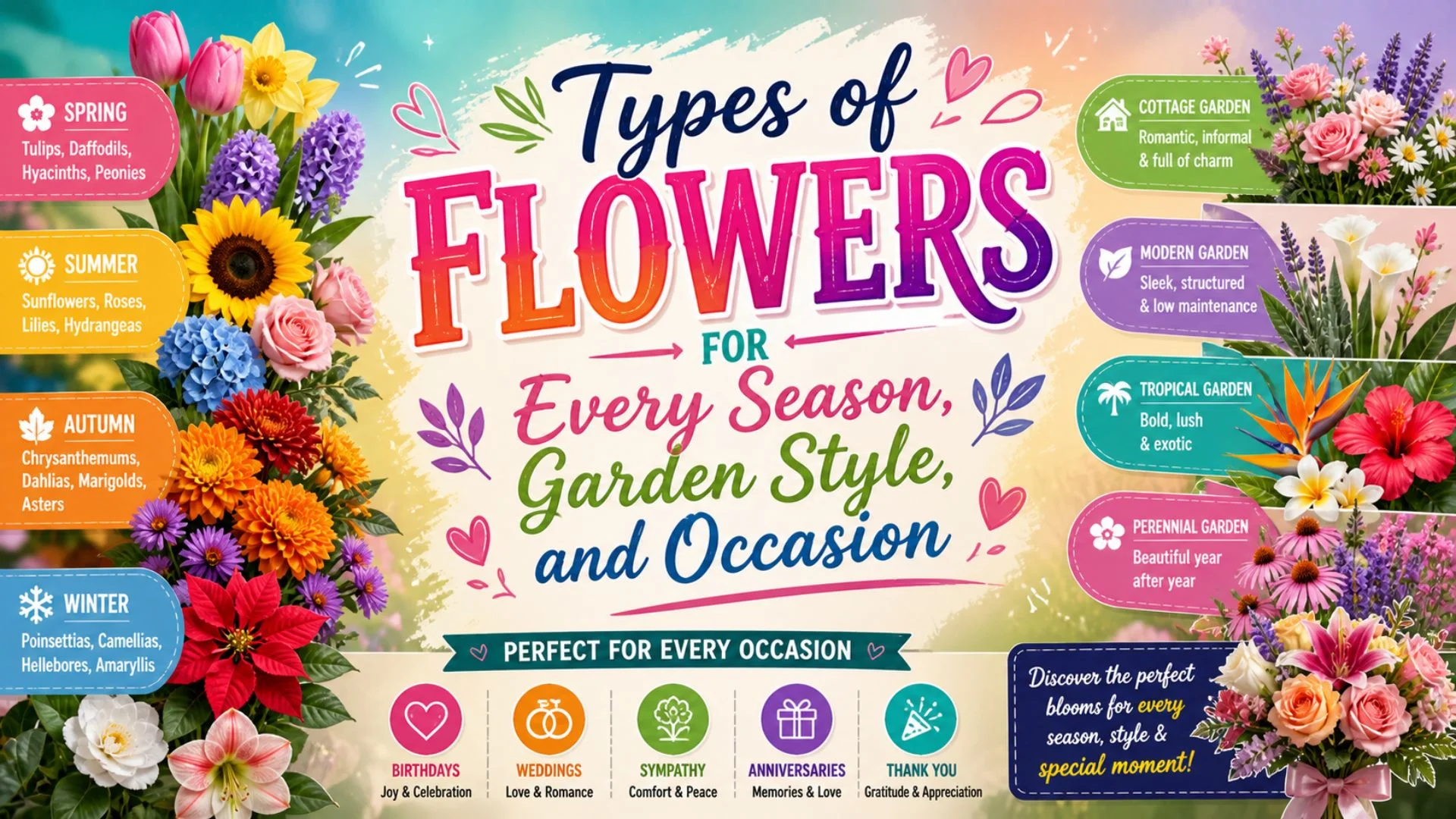
Knowing different types of flowers opens up a world of beauty, color, and meaning. Whether you are planting a garden, choosing a bouquet, or simply appreciating nature, understanding flower varieties helps you make better choices. Some flowers bloom for one season. Others come back year after year. Some love the sun. Others prefer shade. This guide covers over 500 types of flowers organized by category.
The best types of flowers suit your climate, soil, and personal taste. You will find annuals, perennials, biennials, bulbs, shrubs, wildflowers, tropical blooms, and much more. Each flower has its own personality, care requirements, and symbolism. Let us explore the wonderful world of flowers together.
Annual Flowers That Bloom All Season Long
Annual flowers complete their entire life cycle in one growing season. You plant them in spring. They bloom all summer. They die with the first frost. These are perfect for instant color in gardens and containers.
- Marigold
- Petunia
- Zinnia
- Sunflower
- Cosmos
- Snapdragon
- Dahlia
- Geranium
- Impatiens
- Begonia
- Alyssum
- Verbena
- Salvia
- Celosia
- Nasturtium
- Calendula
- Dianthus
- Portulaca
- MorningGlory
- SweetPea
- BachelorButton
- Cornflower
- Larkspur
- Nigella
- LoveInAMist
- Poppy
- CaliforniaPoppy
- IcelandPoppy
- ShirleyPoppy
- Clarkia
- Godetia
- Nemesia
- Diascia
- Bacopa
- Lobelia
- Ageratum
- Cleome
- SpiderFlower
- Tithonia
- MexicanSunflower
- Gazania
- Osteospermum
- Arctotis
- Venidium
- Dimorphotheca
Perennial Flowers That Return Every Year
Perennial flowers come back year after year from the same roots. They are the backbone of any flower garden. While some live only a few years, many can thrive for decades with proper care.
- Peony
- Rose
- Lily
- Iris
- Daylily
- Hosta
- Lavender
- Sage
- RussianSage
- Catmint
- Nepeta
- Salvia
- Perovskia
- Echinacea
- Rudbeckia
- BlackEyedSusan
- Coreopsis
- Tickseed
- Gaillardia
- BlanketFlower
- Achillea
- Yarrow
- Leucanthemum
- ShastaDaisy
- Chrysanthemum
- Aster
- Sedum
- Stonecrop
- Hylotelephium
- Helenium
- Sneezeweed
- Monarda
- BeeBalm
- Phlox
- GardenPhlox
- Campanula
- Bellflower
- Platycodon
- BalloonFlower
- Delphinium
- Larkspur
- Aconitum
- Monkshood
- Aquilegia
- Columbine
Biennial Flowers That Take Two Years
Biennial flowers grow leaves in their first year. They bloom in their second year. Then they die. Some biennials self-seed so freely that they appear to be perennials. These add lovely surprises to any garden.
- Hollyhock
- Foxglove
- Digitalis
- CanterburyBell
- CampanulaMedium
- SweetWilliam
- DianthusBarbatus
- Wallflower
- Erysimum
- Cheiranthus
- EveningPrimrose
- Oenothera
- Mullein
- Verbascum
- ForgetMeNot
- Myosotis
- Honesty
- Lunaria
- MoneyPlant
- SilverDollar
- Stock
- Matthiola
- ClarySage
- SalviaSclarea
- QueenAnnesLace
- DaucusCarota
- Teasel
- Dipsacus
- Angelica
- AngelicaArchangelica
- CarrotFlower
- ParsleyFlower
- CeleryFlower
- CabbageRose
- BroccoliFlower
- CauliflowerFlower
- KaleFlower
- Borage
- BoragoOfficinalis
- Comfrey
- Symphytum
- Lungwort
- Pulmonaria
- Brunnera
- SiberianBugloss
Bulb Flowers for Spring and Summer Color
Bulb flowers grow from underground storage structures. They are planted in fall for spring blooms or in spring for summer blooms. These are some of the most beloved flowers in the world.
- Tulip
- Daffodil
- Narcissus
- Hyacinth
- Crocus
- Snowdrop
- Galanthus
- Iris
- DutchIris
- ReticulataIris
- Allium
- OrnamentalOnion
- Fritillaria
- CrownImperial
- Lily
- AsiaticLily
- OrientalLily
- TrumpetLily
- MartagonLily
- Gladiolus
- Dahlia
- Begonia
- TuberousBegonia
- Ranunculus
- Anemone
- Windflower
- GrapeHyacinth
- Muscari
- Scilla
- Squill
- Chionodoxa
- GloryOfTheSnow
- Puschkinia
- StripedSquill
- Camassia
- Quamash
- Erythronium
- DogtoothViolet
- TroutLily
- Leucojum
- SummerSnowflake
- Amaryllis
- Hippeastrum
- Paperwhite
- NarcissusPapyraceus
Rose Types for Every Garden
Roses are the most beloved flowers in the world. There are thousands of rose varieties. They come in every color except true blue. Each type has different growth habits and care requirements.
- HybridTea
- Grandiflora
- Floribunda
- Polyantha
- Miniature
- MicroMini
- Climbing
- Rambling
- Shrub
- EnglishRose
- DavidAustin
- OldGardenRose
- Gallica
- Damask
- Alba
- Centifolia
- MossRose
- ChinaRose
- TeaRose
- Bourbon
- Noisette
- HybridPerpetual
- WildRose
- SpeciesRose
- Rugosa
- CarolinaRose
- VirginiaRose
- PrairieRose
- SwampRose
- BeachRose
- DogRose
- SweetBriar
- BurnetRose
- ScotchRose
- JapaneseRose
- KoreanRose
- SichuanRose
- ChestnutRose
- FatherHugoRose
- GoldenRose
- AustrianCopper
- PersianYellow
- HarisonYellow
- FoetidaRose
- SpinosissimaRose
Wildflower Types for Natural Meadows
Wildflowers grow naturally without human help. They are adapted to local climates and soils. Planting wildflowers supports bees, butterflies, and other pollinators. They create beautiful, low-maintenance meadows.
- BlackEyedSusan
- PurpleConeflower
- YellowConeflower
- ButterflyWeed
- Milkweed
- CommonMilkweed
- SwampMilkweed
- ButterflyMilkweed
- JoePyeWeed
- Ironweed
- Goldenrod
- Aster
- NewEnglandAster
- HeathAster
- SmoothAster
- BlueAster
- WhiteAster
- PurpleAster
- OxeyeDaisy
- Marguerite
- WildChrysanthemum
- Tickseed
- Coreopsis
- LanceleafCoreopsis
- ThreadleafCoreopsis
- PrairieCoreopsis
- BlanketFlower
- Gaillardia
- IndianBlanket
- Firewheel
- WildBergamot
- BeeBalm
- SpottedBeeBalm
- Horsemint
- WildQuinine
- CulversRoot
- PrairieSmoke
- PrairieDropseed
- LittleBluestem
- BigBluestem
- Switchgrass
- Indiangrass
- WildRye
- CanadaGoldenrod
- SeasideGoldenrod
Tropical and Rare Flower Types
Tropical flowers come from warm, humid climates. They add drama and excitement to any garden. Some can be grown as annuals in cooler climates. Others need greenhouse protection.
- Hibiscus
- Bougainvillea
- Plumeria
- Frangipani
- BirdOfParadise
- Strelitzia
- Orchid
- Cattleya
- Phalaenopsis
- MothOrchid
- Dendrobium
- Oncidium
- DancingLady
- Cymbidium
- Vanda
- Paphiopedilum
- SlipperOrchid
- Heliconia
- LobsterClaw
- Ginger
- TorchGinger
- ShellGinger
- BeehiveGinger
- Costus
- SpiralGinger
- Bromeliad
- Aechmea
- Guzmania
- Neoregalia
- Tillandsia
- AirPlant
- Anthurium
- FlamingoFlower
- PeaceLily
- Spathiphyllum
- Calathea
- Maranta
- PrayerPlant
- Croton
- Codiaeum
- Bougainvillea
- Allamanda
- GoldenTrumpet
- Mandevilla
- Dipladenia
- PassionFlower
- Passiflora
Fragrant Flower Types for Sensory Gardens
Fragrant flowers add another dimension to your garden. Their scents can calm, energize, or inspire. These are the most fragrant flowers you can grow. Place them near windows, paths, and seating areas.
- Lavender
- Rose
- Jasmine
- StarJasmine
- ConfederateJasmine
- Honeysuckle
- Lonicera
- Gardenia
- CapeJasmine
- Lilac
- Syringa
- Peony
- Paeonia
- Lily
- OrientalLily
- StargazerLily
- CasablancaLily
- Hyacinth
- DutchHyacinth
- GrapeHyacinth
- Muscari
- SweetPea
- Lathyrus
- Dianthus
- Carnation
- Pinks
- SweetWilliam
- Stock
- Matthiola
- EveningPrimrose
- NightPhlox
- Nicotiana
- FloweringTobacco
- Heliotrope
- CherryPie
- Mignonette
- Reseda
- MockOrange
- Philadelphus
- Viburnum
- Carlesii
- Daphne
- WinterDaphne
- SweetBox
- Sarcococca
- Wintersweet
- Chimonanthus
- Edgeworthia
- Paperbush
Flower Types by Color for Rainbow Gardens
Choosing flowers by color helps you create specific moods. Red flowers energize. Yellow flowers cheer. Blue flowers calm. White flowers purify. Here are flowers in every color of the rainbow.
- RedRose
- RedTulip
- RedDahlia
- RedGeranium
- RedSalvia
- RedPetunia
- RedZinnia
- RedCarnation
- RedLily
- RedAmaryllis
- RedHibiscus
- RedPoppy
- RedPeony
- RedBegonia
- RedVerbena
- RedImpatiens
- RedSnapdragon
- RedCosmos
- RedMarigold
- RedCelosia
- PinkRose
- PinkTulip
- PinkDahlia
- PinkPeony
- PinkLily
- PinkHyacinth
- PinkLavender
- PinkHydrangea
- PinkCamellia
- PinkAzalea
- PinkRhododendron
- PinkMagnolia
- PinkCherryBlossom
- PinkAppleBlossom
- PinkAlmondBlossom
- PinkDogwood
- PinkCrabapple
- PinkHawthorn
- PinkSpirea
- PinkWeigela
- WhiteRose
- WhiteTulip
- WhiteLily
- WhiteDaisy
- WhitePeony
- WhiteHydrangea
- WhiteLavender
- WhiteJasmine
- WhiteGardenia
- WhiteMagnolia
- WhiteCamellia
- WhiteAzalea
- WhiteRhododendron
- WhiteDogwood
- WhiteCherryBlossom
- WhiteAppleBlossom
- WhitePearBlossom
- WhitePlumBlossom
- WhiteSpirea
- WhiteViburnum
- YellowRose
- YellowTulip
- YellowDaisy
- YellowSunflower
- YellowMarigold
- YellowZinnia
- YellowDahlia
- YellowLily
- YellowIris
- YellowCrocus
- YellowDaffodil
- YellowNarcissus
- YellowHyacinth
- YellowPrimrose
- YellowEveningPrimrose
- YellowCoreopsis
- YellowRudbeckia
- YellowHelianthus
- YellowSolidago
- YellowGoldenrod
- OrangeRose
- OrangeTulip
- OrangeDaisy
- OrangeSunflower
- OrangeMarigold
- OrangeZinnia
- OrangeDahlia
- OrangeLily
- OrangeIris
- OrangeHibiscus
- OrangeBirdOfParadise
- OrangeCanna
- OrangeBegonia
- OrangeGeranium
- OrangeImpatiens
- OrangeCosmos
- OrangeNasturtium
- OrangeCaliforniaPoppy
- OrangeEschscholzia
- OrangeAlstroemeria
- PurpleRose
- PurpleTulip
- PurpleDaisy
- PurpleLilac
- PurpleLavender
- PurpleIris
- PurpleHyacinth
- PurpleCrocus
- PurpleAllium
- PurpleSalvia
- PurpleVerbena
- PurplePetunia
- PurpleZinnia
- PurpleDahlia
- PurplePeony
- PurpleClematis
- PurpleWisteria
- PurpleBellflower
- PurpleCampanula
- PurpleDelphinium
- BlueRose
- BlueTulip
- BlueIris
- BlueHyacinth
- BlueCrocus
- BlueScilla
- BlueSquill
- BlueChionodoxa
- BlueMuscari
- BlueGrapeHyacinth
- BlueForgetMeNot
- BlueMyosotis
- BlueLobelia
- BlueSalvia
- BlueVerbena
- BluePetunia
- BlueMorningGlory
- BlueCornflower
- BlueBachelorButton
- BlueCentaurea
- BlueDelphinium
- BlueLarkspur
- BlueAconitum
- BlueMonkshood
- BlueHydrangea
- BlueCampanula
- BlueBellflower
- BluePlatycodon
- BlueBalloonFlower
- BlueGentian
- BluePhlox
- BluePolemonium
- BlueJacobSLadder
- BluePenstemon
- BlueVeronica
- BlueSpeedwell
- BlueStatice
- BlueLimonium
- BlueSeaHolly
- BlueEryngium
- BlueThistle
- BlueEchinops
- BlueGlobeThistle
Medicinal Flower Types for Healing Gardens
Medicinal flowers have been used for centuries to treat ailments and promote wellness. These blooms are both beautiful and beneficial. Growing them in your garden gives you natural remedies right outside your door. Many are easy to grow and have multiple uses.
- Calendula
- Chamomile
- Echinacea
- Lavender
- Feverfew
- Yarrow
- StJohnsWort
- Borage
- Comfrey
- Mullein
- RedClover
- PurpleClover
- WhiteClover
- Hibiscus
- Rose
- Rosehip
- Jasmine
- Passionflower
- Hops
- Valerian
- Motherwort
- LemonBalm
- BeeBalm
- Monarda
- MilkThistle
- BlessedThistle
- Eyebright
- Goldenrod
- Elderflower
- Elderberry
- LindenFlower
- LimeBlossom
- Violet
- Pansy
- Heartsease
- Nasturtium
- Marigold
- PotMarigold
- Cornflower
- BachelorButton
- Poppy
- OpiumPoppy
- IcelandPoppy
- CaliforniaPoppy
- Plumeria
Edible Flower Types for Culinary Gardens
Edible flowers add beauty, color, and unique flavors to your meals. They can be used in salads, desserts, drinks, and as garnishes. Many have surprising tastes from peppery to sweet. Always ensure flowers are grown without pesticides before eating them.
- Nasturtium
- Pansy
- Viola
- JohnnyJumpUp
- Calendula
- PotMarigold
- Borage
- BeeBalm
- Monarda
- Lavender
- Rose
- RosePetal
- Hibiscus
- SquashBlossom
- ZucchiniBlossom
- PumpkinBlossom
- Daylily
- Lily
- Tulip
- Dianthus
- Carnation
- Pinks
- SweetWilliam
- ChiveBlossom
- GarlicChiveBlossom
- OnionBlossom
- LeekBlossom
- BroccoliFlower
- CauliflowerFlower
- ArugulaFlower
- MustardFlower
- RadishFlower
- PeaFlower
- BeanFlower
- AppleBlossom
- CherryBlossom
- PlumBlossom
- PeachBlossom
- PearBlossom
- CitrusBlossom
- LemonBlossom
- OrangeBlossom
- LimeBlossom
- GrapeBlossom
Night Blooming Flower Types for Moon Gardens
Night blooming flowers open their petals after sunset. They release intoxicating fragrances to attract night pollinators like moths and bats. These flowers create magical moon gardens that come alive in the evening. They are perfect for patios and windows where you can enjoy their evening beauty.
- Moonflower
- EveningPrimrose
- NightBloomingCereus
- QueenOfTheNight
- NightPhlox
- MidnightCandy
- FourOClock
- MarvelOfPeru
- NightGlory
- Moonvine
- NightBloomingJessamine
- NightBloomingJasmine
- Cestrum
- NightScentedStock
- MatthiolaBicornis
- NightScentedNicotiana
- FloweringTobacco
- NightPetunia
- PetuniaAxillaris
- EveningStock
- NightBloomingWaterLily
- VictoriaWaterLily
- NightBloomingLotus
- Datura
- AngelTrumpet
- Brugmansia
- NightBloomingCactus
- Selenicereus
- Epiphyllum
- OrchidCactus
- NightBloomingHibiscus
- HibiscusTrionum
- EveningHibiscus
- NightBloomingGourd
- NightBloomingCucumber
- NightBloomingMorningGlory
- IpomoeaAlba
- NightBloomingConvolvulus
- EveningSnow
- EveningCampion
- NightFloweringCatchfly
- SileneNoctiflora
- NightBloomingSilene
- EveningLychnis
- NightBloomingCampion
How to Choose the Right Types of Flowers for Your Garden
Choosing the right types of flowers starts with knowing your growing conditions. How much sun does your garden get? Some flowers need full sun. Others thrive in shade. What type of soil do you have? Sandy soil drains quickly. Clay soil holds water. Choose flowers that match your conditions.
Consider bloom time too. Plant early spring bulbs like crocus and daffodils. Add summer perennials like coneflowers and black eyed susans. Finish with fall asters and chrysanthemums. This gives you color all season long. Also think about height. Plant tall flowers in the back. Medium flowers in the middle. Short flowers in the front.
Common Mistakes When Growing Different Types of Flowers
Some mistakes can kill your flowers quickly. Overwatering is the most common problem. Most flowers prefer soil that dries out between waterings. Underwatering is also harmful. New plants need consistent moisture. Established plants are more drought tolerant.
Planting at the wrong time is another mistake. Spring bulbs need to be planted in fall. Summer bulbs need to be planted in spring. Annuals go in after the last frost. Perennials can go in spring or fall. Finally, do not crowd your plants. Each flower needs space for air circulation. Crowded plants get diseases.
Frequently Asked Questions About Types of Flowers
What are the easiest types of flowers for beginners?
Marigolds, zinnias, sunflowers, and cosmos are very easy. Petunias, geraniums, and impatiens are also great choices. These flowers are forgiving and bloom all season long.
What types of flowers bloom all summer?
Annuals like marigolds, petunias, and zinnias bloom all summer. Perennials like coneflowers, black eyed susans, and daylilies also bloom for many weeks. Choose a mix for continuous color.
What types of flowers attract butterflies?
Butterfly weed, milkweed, coneflowers, black eyed susans, and asters are butterfly magnets. Lavender, bee balm, and phlox also attract many butterflies. Plant them in sunny areas.
What types of flowers attract hummingbirds?
Hummingbirds love tubular flowers like trumpet vine, honeysuckle, and bee balm. Salvia, penstemon, and columbine are also favorites. Red flowers are especially attractive to hummingbirds.
What types of flowers are best for cutting?
Roses, lilies, dahlias, zinnias, and sunflowers make excellent cut flowers. Snapdragons, delphiniums, and gladiolus are also great. Cut them in the morning for longest vase life.
What types of flowers are shade tolerant?
Impatiens, begonias, and fuchsias love shade. Hosta, astilbe, and hellebore also thrive without much sun. Foxglove and columbine tolerate partial shade beautifully.
What types of flowers are drought tolerant?
Lavender, sedum, and yarrow are very drought tolerant. Coneflowers, black eyed susans, and butterfly weed also handle dry conditions. These are perfect for low water gardens.
What types of flowers bloom in winter?
Hellebores, also called Christmas roses, bloom in winter. Camellias, winter jasmine, and witch hazel also flower during cold months. Snowdrops and early crocus appear in late winter.
Conclusion
Knowing different types of flowers helps you create a beautiful, thriving garden. This comprehensive guide covered over 500 flower types across many categories. You have seen annuals for instant color, perennials that return each year, biennials that bloom in their second year, bulbs for spring and summer, roses in every form, wildflowers for natural meadows, tropical blooms for flair, fragrant flowers for sensory gardens, and flowers organized by color.
Types of flowers offer endless possibilities for gardeners of all skill levels. Take your time exploring these wonderful plants. Choose the ones that match your sun, soil, and style. Whether you plant marigolds in a pot or acres of wildflowers, every flower brings joy. Start your garden today and watch beauty grow.

Michael Harris is a content writer at NamelyHub, where he shares creative and unique name ideas for every purpose. With a strong interest in branding and modern naming trends, he creates helpful collections of names for pets, teams, businesses, and more.
His goal is to make finding the perfect name simple, inspiring, and accessible for everyone.